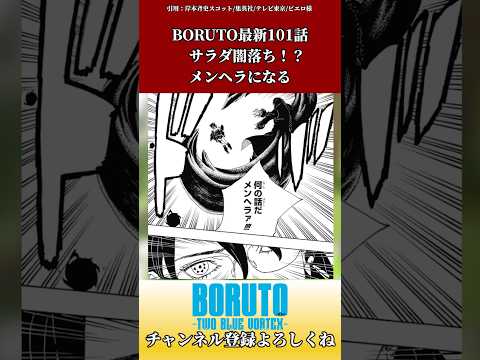
▶ Watch the original YouTube video
Exploring Sarada’s Complex Character in Boruto: The Heavy Woman Trope
The latest episode of Boruto has sparked discussions around Sarada’s character, particularly her portrayal as a “heavy woman.” This analysis delves into the reactions from viewers and the implications of her character development.
What Happened
The recent episode of Boruto, titled “Episode 101: Sarada’s Dark Descent?!”, has drawn significant attention to Sarada’s characterization as a “heavy woman” or a character with emotional burdens. This portrayal has led to various reactions online, prompting a deeper exploration of her character’s complexities.
Why It Matters
Understanding Sarada’s character is crucial for fans of the series, as it reflects broader themes of emotional struggles and familial expectations. The reactions to her characterization highlight how viewers connect with her journey, revealing insights into contemporary anime narratives.
Background
Since her introduction in 2017, Sarada has been depicted as the daughter of Sakura and Sasuke, leading to high expectations regarding her character development. Her relationships with her parents and her own growth have been focal points of interest among fans, particularly in light of her recent portrayal as emotionally complex.
Key Points
- Sarada’s characterization as a “heavy woman” reflects her emotional struggles.
- Viewers’ reactions reveal a mix of empathy and critique regarding her portrayal.
- Comparisons with characters from other series highlight common themes of familial pressure.
- Future developments may further explore her emotional growth and relationships.
Timeline
- 2017: Sarada is introduced in Boruto.
- Recent episodes highlight her emotional struggles.
- Viewer discussions emerge around her characterization.
Perspectives
Online discussions reveal diverse opinions about Sarada’s character. Some viewers empathize with her struggles, arguing that her portrayal as a “heavy woman” resonates with their own experiences. Others critique the use of this trope, suggesting it oversimplifies her character. The debate underscores the complexity of her emotional narrative.
Insights
Sarada’s characterization serves as a lens through which viewers can explore themes of emotional burden and familial expectations. The ongoing discussion around her character reflects a broader trend in anime, where psychological depth is increasingly valued. As Sarada’s story unfolds, it will be interesting to see how her character evolves and what it signifies for the audience.

Comments